

What is Thyroid Disease?
Learn about the different types of thyroid disease and how to be diagnosed.
You’ve been diagnosed with thyroid disease. Now what?
As mentioned in my previous post (What is the Thyroid?) , the thyroid is the master gland in our bodies. It regulates metabolism, body temperature, digestion, menstrual cycle and so much more. It is estimated that 1 in 8 women will develop thyroid disease. When PROPERLY diagnosed with thyroid disease, you either have hypothyroidism (underactive thyroid) or hyperthyroidism (overactive thyroid). I recommend all my clients get properly tested through a series of blood tests to determine if they truly have a thyroid disease or if something else is at play.

People who have been diagnosed with thyroid disease may experience several of the following symptoms:
-difficulty losing or gaining weight (depending on the condition)
-fertility issues
-difficulty regulating body temperature
-irregular periods
-difficulty swallowing
-fatigue
-dry skin
-depression
-slowed heart rate
-menstrual irregularities
-irritable bowels
The autoimmune disease, Hashimoto’s, is the most common cause for hypothyroidism (which is what I have). On the flip side, Grave’s disease is the autoimmune condition for hyperthyroidism. Please note that not everyone who has a thyroid disease necessarily has Hashimoto’s or Grave’s. In fact, the autoimmune disease is what leads to the thyroid disease.
When I was diagnosed with thyroid disease, I didn’t understand that I had an autoimmune disease. I heard the doctor say “Hashimoto’s” but I didn’t know what that meant. I was also barely 18 and not focused on “adult” things like that at the time.
Looking back, I wish that I would have asked about the depth of the disease OR that my doctor would have explained the diagnosis to me. Sending me on my way with medication to take for the rest of my life was pretty bold without an explanation. There isn’t anything I can do to change my experience, but I can certainly changes others’ experiences with these types of diagnoses.
I thought the only way to manage symptoms was through medication. I didn’t realize how important other lifestyle factors can be to managing thyroid disease. I was on different medications for years and although my lab work looked great, I still wasn’t feeling my best. I knew there had to be another way to live. I finally found what I was looking for when I discovered the holistic way of living which means working on my entire self- not just the symptoms.

I made changes to my lifestyle such prioritizing sleep, incorporating relaxation techniques, dialing down my intense workouts, and focusing on nutrient-dense food rather than short-term diets. I’ve been able to manage my symptoms with minimal medication and have a much better understanding of my diagnosis than I did when I first was diagnosed.
Does this story sound familiar? Are you confused on what to do with your thyroid diagnosis? Schedule a consultation with me by clicking the contact button. Together, we’ll discuss your symptoms, causes and create a plan for you to work towards an asymptomatic life. I look forward to hearing from you!

What is the Thyroid?
Learn about the thyroid and its purpose in the body.
The first time I heard about the thyroid was through my Mom. For as long as I can remember, she’s had thyroid disease. I didn’t understand it, and honestly thought it was something “older people got.” It also seemed like something insignificant. Oh man, I can’t even believe I admitted that.
To help clear up exactly how important the thyroid is, I urge you to read on…
The thyroid is a butterfly-shaped gland at the base of the neck in charge of metabolism. The rate at which your thyroid functions directly impacts your body temperature, ability to lose/gain weight, ability to conceive, mood, hair loss, and much more. Pretty big deal, huh?
The thyroid is part of the endocrine system which contains glands responsible for producing, storing, and releasing hormones throughout the bloodstream. The pituitary gland and hypothalamus in the brain communicate to the thyroid on how much triiodothyronine (T3) and thyroxine (t4) to make. The communication looks like this:
The hypothalamic thyrotropin-releasing hormone (TRH) signals the pituitary gland to communicate to the thyroid on how much T3 and T4 to make. The thyroid gland does this by producing more or less of the thyroid-stimulating hormone (TSH).
The majority of the hormone produced by our thyroid gland is T4 which is the inactive form of the hormone. When T4 is made, it converts into the active form of thyroid hormone, T3.

With me so far?
After T3 is converted from T4, it is then converted into either Free T3 or Reverse T3. The form that “does the work” such as regulate body temperature, cause metabolism to rise, keep our bowels moving, and keep our hormones in balance is Free T3.
Pretty incredible, right? All of this happens without us even knowing about it- unless your thyroid isn’t working properly. The prevalence of thyroid disease is growing and it’s important to know how yours is functioning and which direction to go with your treatment.
As a health coach, I guide women on which blood work to ask for and dig deep to find underlying issues to thyroid malfunction. The first step towards healing is knowing our current condition. Do you know yours?
Schedule a consultation with me today here. I look forward to talking to you and hearing how we can build a plan to strengthen your thyroid for better health.

My Path to Holistic Health
My story to holistic healing with Hashimoto’s.
My path to living in a more holistic way was not easy or linear. At times, it felt like an unfair reality that I was living in because of the ups and downs, but I also believe that the health struggles I went through to get here were a blessing. I could not imagine feeling the way I do now (empowered, educated, energetic) if I hadn’t decided to change the way I was living (depressed, bloated, fatigued) and adopt a more holistic way of life.
I was diagnosed with Hashimoto’s when I was 17 years old. I was working as a camp counselor and was so exhausted by the end of the day which I felt was typical after chasing 10 year olds around all day in the heat. The major red flag was that I was gaining weight even though I was always running and sweating (I thought that meant I should automatically be losing weight). My Mom, who has Hashimoto’s, recognized that something much be “off” and scheduled an appointment for me with an endocrinologist.
I went to the appointment, they ran some blood work, and off I went. My follow-up appointment went like this: an official diagnosis that I do have Hashimoto’s, a prescription, and a “you’ll be on this the rest of your life but it’s not that bad” speech.

As a 17 year old, I didn’t know how to feel. In a way, I felt relief because there was a definite reason my body was reacting this way. But on the other hand, it felt weird to feel like I had this “adult" diagnosis and there was “nothing I could do” about it except be on medicine.
I went through college with not much more thought to it rather than “take your medicine, get your blood work every 6 months, and you’ll be fine.”
After my senior year of college, everything changed.
I had a really difficult breakup with my high school sweetheart and my Grandpa died that Fall. Now, the upside was that through all of that I actually had met the man I would marry (thank God for that timing). I just didn’t know it at the time…
I can say with 99% accuracy that the trauma of a breakup and the first death in my family set me into my very first Hashimoto’s flare up. That was the first time I had ever truly felt like I was out of control of my health. I was gaining weight, depressed, exhausted, disinterested with life, and simply miserable. I felt like I was a shell of the old Evie. I was physically dizzy, paranoid and in a constant state of worry which made me even more anxious!
I had enough of this dark place I was living in and my family could tell I was in need of additional support. I went to my primary care physician to discuss some options. He prescribed an anti-depressant and anti-anxiety medication for me because there were no physical ailments he could see that would be causing my physical symptoms of dizziness.

I filled the prescription, took it home and just looked at the bottle. My gut instinct was that this was not the solution. I could not bring myself to take medication.
At that moment, I remembered that my PCP also said that he knew of a social worker who practices Cognitive Behavioral Therapy. He said I could also try therapy and see if that helped. I decided that I would rather try talking to someone before I start taking medication. I want to stress how difficult this decision was for me because therapy was (and sometimes still is) a sign of weakness. It meant that even though I had “everything” I could ever want in life, I was still “unhappy for some reason.”
Fast-forward 4 years- I’m married and working at a new school as an Intervention Specialist in a classroom with students who had medical needs. I was in way over my head. To spare the details, I had another Hashimoto’s flare up which consisted of insomnia, weight gain, achy joints, skin issues, and depression.
I came home crying most days and I finally told my husband that I couldn’t do it anymore. I would not live my life like this anymore. I refuse to just lie down and let my health go. I needed long-terms solutions.
I didn’t return after that school year and I was working a in much less stressful environment (my adrenals liked this!) and was still experiencing some weight issues. I was a little discouraged because I felt like I was doing “all the right things” but nothing was working. I knew something was going on when my previously tired and true efforts to lose weight were not working.
Gas, bloating, diarrhea, upset stomach, pain after eating and constant headaches had become my norm.
At this time, “gut health” had become something I would see on people’s social media feeds but didn’t quite understand why. Why care about the gut? (funny of me to ask this now considering I care so much about the gut now).
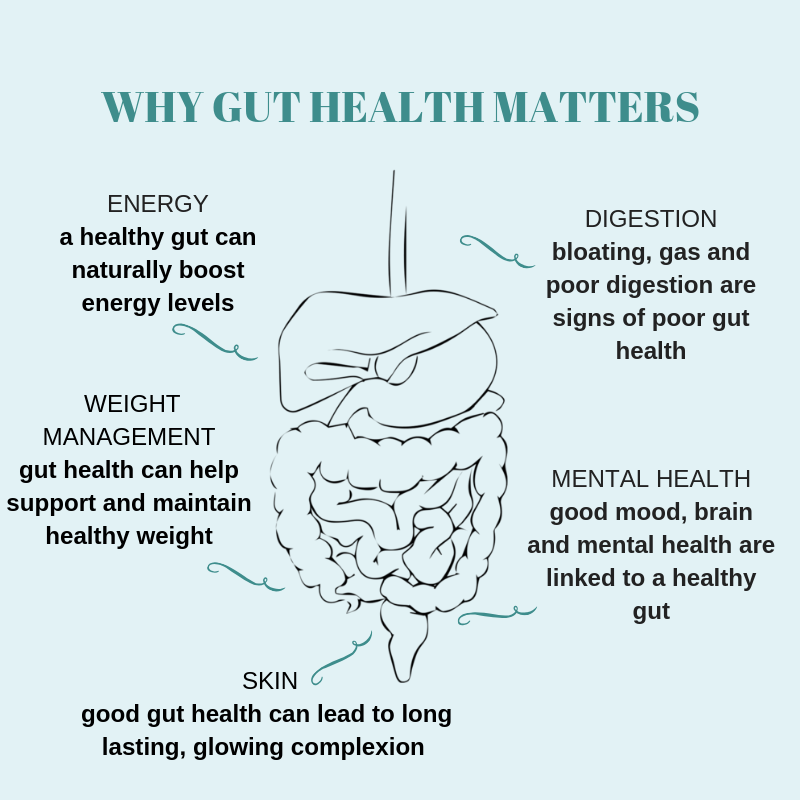
I was doing the turmeric drinks, the bone broth, the fibrous vegetables, but still had trouble.
About 2 months into this self-guided healing, I found my functional nutrition coach. I won’t go into details of that process here, but I worked with him for 18 months to restore my gut function, metabolism, thyroid, and overall health in a holistic manner. That healing journey sparked an interest in my life that I can now see was lying dormant. I knew that I wanted..needed..to care for my body in a holistic way.
After years of exploring the gigantic world of “health,” I felt drawn towards making it more than just a hobby. My own experiences of hormonal imbalance, disordered eating, thyroid dysfunction and body dysmorphia led me down the path of significant healing. I had to learn how to view my body as a wonderfully designed friend rather than a foe. I learned how everything we eat, listen to, and even think affects our health. It’s up to us to make sure we are providing a healthy space for our bodies to flourish.
I enrolled in the Institute for Integrative Nutrition because it aligns with how I live my life and how I teach my clients to live theirs- in a balanced way. As a health coach, I help people gracefully step out of that chaotic carousel and discover their true balance in life. Sure, nutrition is important, but so is our relationship with food, each other, and our careers.
Join me in leading a healthy life with a holistic approach. Schedule a consultation with me here. I look forward to hearing from you!