
Metabolic Testing
Why V02 Max?
Metabolic testing measures the maximum amount of oxygen your body uses during intense exercise. It provides an objective baseline of your aerobic fitness, helps you train in highly personalized heart rate zones, and acts as a strong clinical predictor for cardiovascular health and longevity
This helps us make short term and long term decisions based on heart and lung strength, blood pressure and stiffness in your heart, and the ability to fine tune your ribcage mobility for life long endurance.
If you want even more information on your heart and lung health, as well as overall vascular inflammation, we can look into this in our Premium package with blood work included.
-
You must FAST for a minimum of five hours (only drink water)
Limit your activity beforehand (no exercise)
Refrain from taking any caffeine or stimulants the day of your test and avoid alcohol within 12 hours of it
Wear comfortable clothing. If you're scheduled for a VO2 test, you will need workout shoes and clothes
Workout, casual, or even business clothes are all acceptable, as you will just be relaxing in a chair.
-
You must fast a minimum of three hours before your test (only drink water)
Limit your activity before your visit (no exercise!)
Refrain from taking any caffeine or stimulants the day of your test
Wear (or bring) workout clothes and athletic shoes
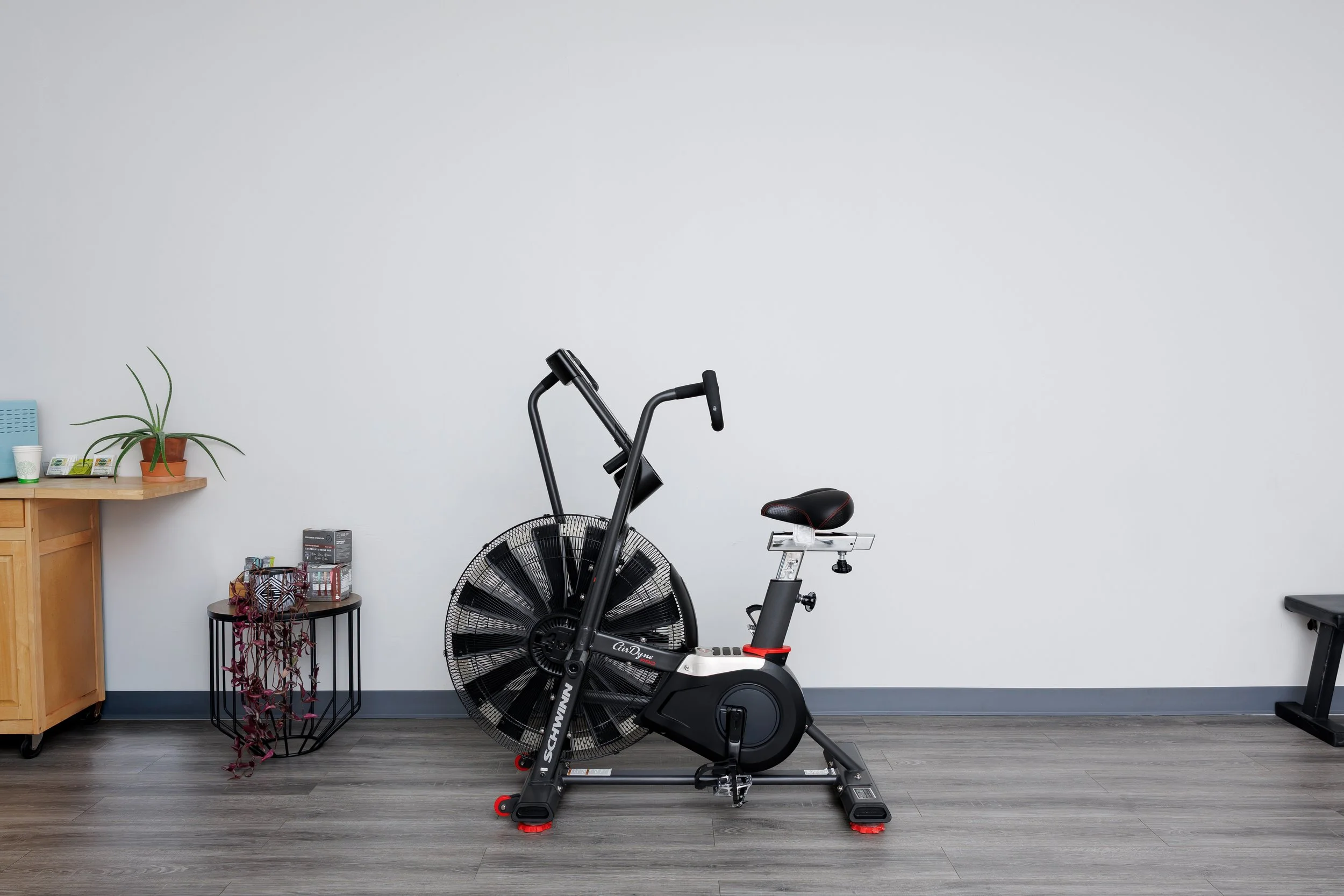
This test is done on a treadmill or bike (10-15 minutes at the most)
Personalized Fitness MetricsBoost Stamina: Enhance your aerobic capacity for increased energy and endurance.
Informed Workouts: Leverage VO2 Max data to design workouts that reduce the risk of injury.
Essential Health Insights: Uncover key health metrics that influence your longevity and overall well-being.
Cellular Performance: Optimize mitochondrial function for maximum cellular efficiency.
Proven Accuracy: Trust the precision relied upon by elite athletes for consistent results.
Zone 2 Training: Maximize your cardiovascular and metabolic health with workouts focused on Zone 2 training.
Additional information includes:Ventilation restrictions reducing overall fitness, health and endurance using Calibre Respiratory Device
Blood oxygen levels SpO2 in legs while cycling reveals leg muscular endurance and oxygen delivery during test using TrainRed Muscle oxygen sensors
🇬🇷
“Simply bringing your VO2 max from ‘low’ (bottom 25th percentile) to ‘below average’ (25th to 50th percentile) is associated with a 50% reduction in all-cause mortality. When you go from ‘low’ to ‘above average’ (50th to 75th percentile) the risk reduction is closer to 70%!”
-
Mobility
Pump handle mechanics/assessment
Bucket handle mechanics/assessment
Diaphragm assessment
Neck breathing strategy
Strength
FEV1
FVC
Sleep/airway assessment
What do we do with this data and what do I do next?Provides a detailed report on what areas to improve to increase areas most in need to improve health and longevity
FAQ
How does central blood pressure testing with a sygmograph test help?
Central blood pressure testing with a sphygmograph (often utilizing pulse wave analysis technology like SphygmoCor) helps by measuring the exact pressure within the aorta closer to your vital organs, rather than relying solely on traditional arm (brachial) measurements. Traditional arm cuffs only provide a superficial look at cardiovascular health, whereas central blood pressure testing captures the actual stress your heart, brain, and kidneys experience. [1, 2, 3]
Here is how this testing specifically helps improve medical care and health outcomes:
More Accurate Cardiovascular Risk Assessment [1]
True Organ Exposure: Measures the precise workload and pressure exerted directly onto the heart and brain.
Better Predictive Value: Provides a more comprehensive assessment to predict future risks of stroke, heart attack, and kidney disease than standard arm tests.
Catches Hidden Hypertension: Identifies high stress near the heart in patients whose standard arm cuff readings falsely appear normal. [1, 2, 3, 4, 5]
Evaluates Vascular Aging and Arterial Stiffness [1, 2, 3]
Pulse Wave Analysis: Analyzes the shape and contour of the arterial pressure wave to detect arterial stiffness.
Wave Reflection Measurement: Tracks how strongly blood pressure waves bounce back from the lower body. Stiffer arteries cause faster wave reflections, meaning higher central pressure and an overworked heart. [1, 2, 3, 4, 5]
Tailors and Optimizes Medications [1]
Drug Differentiation: Reveals how different blood pressure medications impact the heart. Two medications might lower arm blood pressure identically, but one may lower central pressure much more effectively. [1, 2, 3]
Prevents Over-Medication: Allows doctors to individualize treatment choices, occasionally allowing patients to safely manage their condition with less medication